
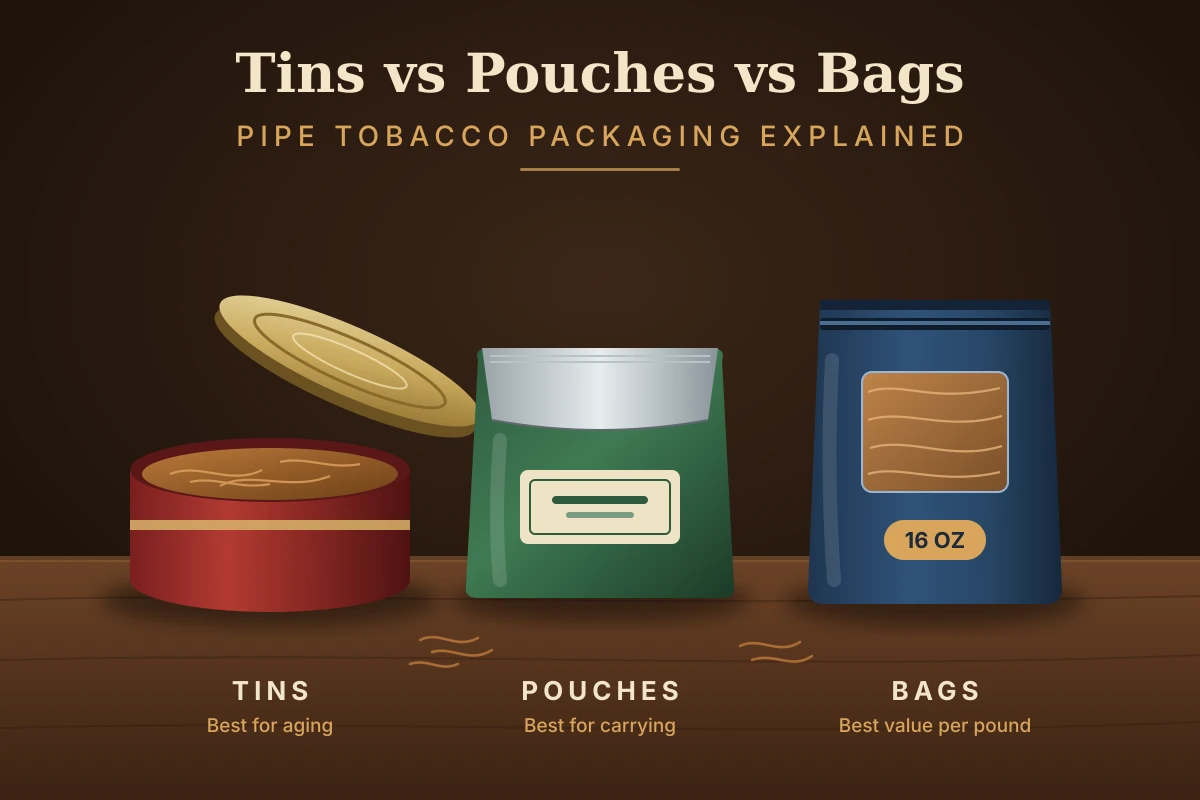
The same blend can reach you three different ways. It can come sealed in a metal tin, folded into a small foil pouch, or packed loose in a resealable bag that holds anything from 1 oz to 5 lb.
The tobacco inside is often identical. What changes is how long it stays fresh, whether it can age, what you pay per pound and how much storage work falls on you. This guide compares all three, then shows you how to store each one.
Quick answer: Tins are best for aging and for trying premium blends, because the factory seal holds moisture and keeps oxygen low for years. Pouches are best for carrying a small amount and finishing it fast. Bags are the cheapest per pound by a wide margin, but once opened they dry out fastest, so anything you will not smoke within a few weeks belongs in airtight glass jars.
Pipe Tobacco Tins vs Pouches vs Bags at a Glance
| Tins | Pouches | Bags | |
| Typical sizes | 50 g, 100 g, 1.75 oz, up to 14 oz | 1 oz to about 1.75 oz | 1 oz, 2 oz, 6 oz, 16 oz, 5 lb |
| Factory seal | Vacuum or pressure sealed metal | Foil laminate, heat sealed | Poly film, zip reseal |
| Sealed shelf life | Many years if the seal holds | Months to a few years | A few years, slowly drying |
| After opening | Weeks (lid is not airtight) | Days to weeks | Weeks if resealed carefully |
| Good for aging | Yes, the best sealed option | No | Only after moving to jars |
| Cost per pound | Highest | High | Lowest |
| Portability | Bulky but crush proof | Best | Poor in large sizes |
| Typical blends | Premium Virginias, English, aromatics | European and drugstore blends | Budget Burley and Virginia |
The most common real-world decision is pipe tobacco tins vs pouches for premium blends, and tins vs bags for daily smokers on a budget. We cover both below.
How Pipe Tobacco Packaging Affects Freshness
Pipe tobacco goes stale when it loses moisture and the aromatic oils and toppings that give it flavor. Both escape faster when air moves across the leaf, so the real test of any container is how well it keeps moisture in and air out.
Tins: The Tightest Seal
A modern tin is sealed at the factory, often under vacuum or with a pull-ring inner lid. When you open a good one, you hear a hiss or a pop as air rushes in. That sound is the best sign the seal held.
Inside a sealed tin, almost no oxygen reaches the leaf and almost no moisture escapes. That is why tins arrive at the moisture level the blender intended, even years later.
The weak point is after opening. The outer lid on most tins is a friction or hinged lid. It keeps dust out but it is not airtight, so an opened tin dries over a few weeks.
Reading the Seal: Pipe Tobacco Packaging Types for Tins
Not every tin is built the same. Before you cellar one, check which of these you have:
- Vacuum sealed round tin. The classic 50 g or 100 g tin with a pull tab or ring under the lid. The best choice for long storage.
- Pressure sealed tin. Sealed tight but not under vacuum. Holds well for years, though seals can loosen with age.
- Hinged flat tin. Common for flakes. Usually sealed with a band of tape or an inner film. Fine for a year or two, less reliable for decades.
- Large friction lid tin (7 to 14 oz). Often a bulk-style tin with a press-on lid. Treat it like a jar that was never fully sealed.
If a tin has a bulging lid, rust at the seam or no pop on opening, assume air got in and smoke it soon.
Pouches: Built for the Pocket
Pouches are small foil laminate packs, usually 1 oz to about 1.75 oz. They are heat sealed at the factory and fold over to close once opened.
Pipe tobacco pouch freshness is good until you open it, then it is short. The fold-over flap lets air in every time you pack a bowl, and the thin pack offers no stiffness to keep the tobacco from being crushed in a pocket.
That is the trade-off by design. A pouch is meant to be finished in days, not months. If you open one and do not plan to smoke it soon, empty it into a small jar.
Bags: Built for Value
Bags are poly film packs with a zip or press seal. At Smokenza they range from 1 oz Golden Harvest packs up to 5 lb Good Stuff bags.
Sealed, a bag keeps tobacco smokable for years if stored cool and dark. But poly film is slightly permeable. Over time it lets moisture and aroma seep out, which is why an older sealed bag can arrive a little drier than a fresh one.
Opened, a bag dries faster than a tin. Every time you open the zip, fresh air enters, and a ribbon cut has a lot of surface area for moisture to leave. Our pipe tobacco cuts explained guide covers why the cut matters so much here.
Pipe Tobacco Tin vs Bulk: Which Should You Pick?
The pipe tobacco tin vs bulk choice usually comes down to three questions.
Is the blend sold both ways? Many premium blends are sold only in tins. Most budget Burley and Virginia blends are sold only in bags. If your blend comes one way, the choice is made for you.
How fast do you smoke? A daily smoker can finish a 16 oz bag before it fades. An occasional smoker may find that a tin, opened only when wanted, wastes less.
Do you want to age it? If yes, start with sealed tins, or move bulk tobacco into jars on day one.
When Tins Make Sense
- You are trying a new premium blend and want to taste it exactly as intended.
- You plan to cellar a Virginia, Virginia-Perique or English blend for flavor change.
- You want a crush-proof container to carry.
- You are giving tobacco as a gift.
When Pipe Tobacco Bulk Bags Make Sense
Pipe tobacco bulk bags win whenever you already know the blend and smoke it often. You pay for tobacco, not for metal, printing and sealing.
They also make sense if you are happy to do the storage work yourself. A 5 lb bag split into jars stores as well as tins and costs a fraction of the price. The budget brands we carry, including OHM, 4 Aces and Gambler, are all bag-only for that reason. Our Good Stuff vs OHM vs 4 Aces comparison covers how those bags differ.
Pipe Tobacco Packaging Cost: What You Pay For the Container
A tin needs metal, a printed label, a seal and more freight weight. A bag needs a thin film and a zip. Here is what that means per pound, using Smokenza's listed prices at the time of writing:
| Bag | Price | Cost per pound |
| Golden Harvest Natural 1 oz bag | $1.65 | $26.40 |
| Good Stuff Red 2 oz bag | $2.40 | $19.20 |
| Gambler Silver 6 oz bag | $5.99 | about $15.97 |
| OHM Silver 16 oz bag | $11.99 | $11.99 |
| Good Stuff Red 5 lb bag | $55.00 | $11.00 |
Prices move, so check the product page before you order. Even so, the pattern is clear. The smaller the pack, the more of your money goes to the container. A premium 50 g tin often costs more per pound than any bag in this table, before you count the blend itself.
The 16 oz Pipe Tobacco Bag: The Sweet Spot
For most daily smokers, the 16 oz pipe tobacco bag is the best balance. It is close to the bulk price per pound, it is small enough to finish before it fades badly, and it reseals well.
Popular choices include 4 Aces Gold, Gambler Regular and Good Stuff Natural. For the cheapest options by blend, see our best cheap pipe tobacco guide.
Pipe Tobacco Packaging and Federal Tax
Here is a detail most packaging guides miss. Federal excise tax on pipe tobacco is charged by weight, not by container. The TTB tax rate schedule lists pipe tobacco at $2.8311 per pound, which works out to about 18 cents for a 1 oz tin or pouch.
So the tax is the same per ounce whether the leaf sits in a tin, a pouch or a 5 lb bag. The price gap you see between formats is almost entirely packaging, freight and brand positioning.
That low pipe tobacco rate, compared with roll-your-own tobacco, is also why so many budget bags exist. We explain that in pipe vs rolling tobacco: why the bag says pipe.
How Long Does Pipe Tobacco Last in a Tin?
How long does pipe tobacco last in a tin? Sealed and stored cool and dark, it can last decades. Collectors regularly open tins that are 20 or 30 years old and find them smokable, sometimes better than new.
Once opened, it is a different story. Expect about two to six weeks before an opened tin dries noticeably, depending on the cut and how humid your room is. Flakes and plugs hold moisture longer than ribbon cuts.
Here is a simple guide for each format:
| Format | Sealed, cool and dark | Opened, lid or zip closed |
| Vacuum sealed tin | Decades | 2 to 6 weeks |
| Foil pouch | Months to a few years | Days to 2 weeks |
| Poly bag | A few years, slowly drying | 4 to 8 weeks at best flavor |
| Mason jar, filled near the top | 10 years or more | Same as opened tin per jar |
Pipe tobacco does not have a true expiry date. The real risks are drying out, losing flavor and mold. Our full guide on does pipe tobacco go bad goes deeper on shelf life by blend type.
Sealed Pipe Tobacco Tins Aging: What Actually Changes
Sealed pipe tobacco tins aging is one of the oldest debates in the hobby. Inside a sealed tin, with very little oxygen, the sugars in Virginia leaf slowly break down and the blend gets smoother, darker and often sweeter. Perique and Oriental leaf tend to blend together more over time. English blends with Latakia usually soften.
Aromatic blends are different. Their flavor comes from toppings, and toppings fade with age instead of improving. Most smokers enjoy aromatics fresh. If you are not sure which style a blend is, our aromatic vs English vs Virginia pipe tobacco guide explains the difference, and Wikipedia's overview of types of tobacco covers Virginia, Burley, Perique and Oriental leaf.
Plume, Mold and Old Tins
Older Virginia flakes can grow a fine white crystal bloom, usually harmless sugar from the leaf. Raised, fuzzy patches with a musty smell are mold, and moldy tobacco goes in the trash. The checks in cigar mold vs plume apply to pipe tobacco too.
The Best Way to Store Pipe Tobacco After Opening
Whatever it came in, the best way to store pipe tobacco after opening is the same: airtight glass, filled close to the top, kept cool and dark.
Glass does not let moisture or aroma through. A full jar leaves very little air inside. And keeping it away from heat and sunlight slows every change you do not want.
Mason Jar Pipe Tobacco Storage
Mason jar pipe tobacco storage is the standard method for a reason. Canning jars are cheap, easy to find and built to seal tight. The design goes back to John Landis Mason's 1858 patent, as the Mason jar history on Wikipedia explains.
To jar a bag or an opened tin:
- Use clean, dry jars with new lids. Half-pint and pint jars suit most smokers.
- Pack the tobacco in firmly but do not crush it. Fill to within about half an inch of the top.
- Close the lid hand-tight.
- Label each jar with the blend and the date.
- Keep jars in a cupboard away from heat, windows and kitchen appliances.
- Open one jar at a time and leave the rest sealed.
For a 5 lb bag, this one step makes the biggest difference. A bag that would go stale in a month stays fresh for years when split into jars.
Keep menthol and strongly flavored blends in their own jars. Their scent travels and will tint anything stored next to them.
For opened bags, press the air out and reseal after every bowl. Avoid the refrigerator and freezer. Cold storage pulls moisture out and can cause condensation when you open the container.
How to Keep Pipe Tobacco Moist
Even with good storage, tobacco loses moisture each time you open it. Here is how to keep pipe tobacco moist without making it soggy.
- Use a two-way humidity pack. These packs add moisture when tobacco is dry and absorb it when tobacco is wet. Many pipe smokers use a pack in the 62 to 69 percent range. Boveda's own RH guide for tobacco explains which level suits an airtight container.
- Keep your daily jar small. A small jar opened twice a day loses less moisture than a big bag opened twice a day.
- Do not overdo it. Wet tobacco burns poorly, needs constant relighting and is the most common cause of tongue bite after hot smoking. Our pipe tobacco tongue bite guide covers both causes.
- Give dried tobacco time. If a bag has already dried out, slow rehydration works better than a quick soak. Follow the steps in how to rehydrate pipe tobacco bags.
The Right Moisture to Pack
Tobacco at the right moisture feels springy. Squeeze a pinch and it should hold together briefly, then spring back without feeling wet or crunchy.
If it crumbles, it is too dry. If it stays in a damp ball, it is too wet. Spread it out on paper for 15 to 30 minutes and test again. Once the moisture is right, our three-step pipe packing method gives you an even burn.
Natural and Additive-Free Blends Need Extra Care
Most budget bags use casings and humectants that help hold moisture. Uncased blends such as Good Stuff Natural have no casing and no preservatives, so they dry faster once opened and benefit most from jars and a humidity pack. Our guides to natural pipe tobacco and additive-free tobacco explain what the label means.
Which Format Should You Choose?
Your habits decide this more than the tobacco does.
- First bowl ever: a small bag, such as a 6 oz OHM Silver. Low cost, easy to finish. Pair it with our guide to choosing your first tobacco pipe.
- Testing several blends cheaply: 1 oz and 2 oz bags, like the Golden Harvest 1 oz pack of 12 or Good Stuff Menthol 2 oz.
- Daily smoker of one blend: a 16 oz bag, or a 5 lb bag split into jars.
- Cellaring and aging: sealed tins of Virginia or English blends, or jarred bulk.
- Carrying tobacco out: a pouch, or a small jar or tin refilled from your main supply.
- Turkish fans: compare the bag options in Turkish pipe tobacco compared.
A note on Bugler pouches: they are sold as roll-your-own tobacco, not pipe tobacco, and the cut is made for papers. If you are weighing the two, read pipe tobacco in cigarettes first.
If You Store Cigars Too
Cigars follow the same rules with tighter humidity targets. See the best cigar humidor for home and aging cigars at home. For picks, try the best dark cigars for rich, less sweet flavor, best flavored cigars for cold weather, Swisher Sweets explained or Al Capone Slims, Cognac and Sweets explained.
FAQs
Are tins better than bags for pipe tobacco?
For aging and long sealed storage, yes. For price per pound, no. Many blends are the same tobacco in either format, so the right choice depends on how fast you smoke and whether you will jar your bulk.
Can I age tobacco from a bag?
Yes, if you move it into airtight jars filled near the top. Left in the original bag, it slowly dries instead of aging.
Is it safe to smoke tobacco from a very old tin?
If the seal is held, there is no mold and it smells like tobacco, it is generally smokable. Any musty smell or fuzzy growth means throw it out.
Does packaging change the nicotine?
No. Packaging affects moisture and flavor, not nicotine content. All pipe tobacco contains nicotine, and the FDA's pipe tobacco page notes it is a combustible tobacco product with real health risks. For nicotine in cigars, see how much nicotine is in a cigar.
Summary
Pipe tobacco packaging decides how fresh your tobacco stays, whether it can age and how much you pay for it. Tins give you the best sealed storage and the most reliable aging, at the highest cost per pound. Pouches are made to carry and finish quickly. Bags are the cheapest by far and work just as well as tins for long storage once you move them into sealed mason jars. Whatever you choose, reseal after every bowl, keep it cool and dark, and use a two-way humidity pack in your daily jar. Compare every bag size in the pipe tobacco collection.
What did you think?
Share this article
Help others discover this content by sharing it with your network.