
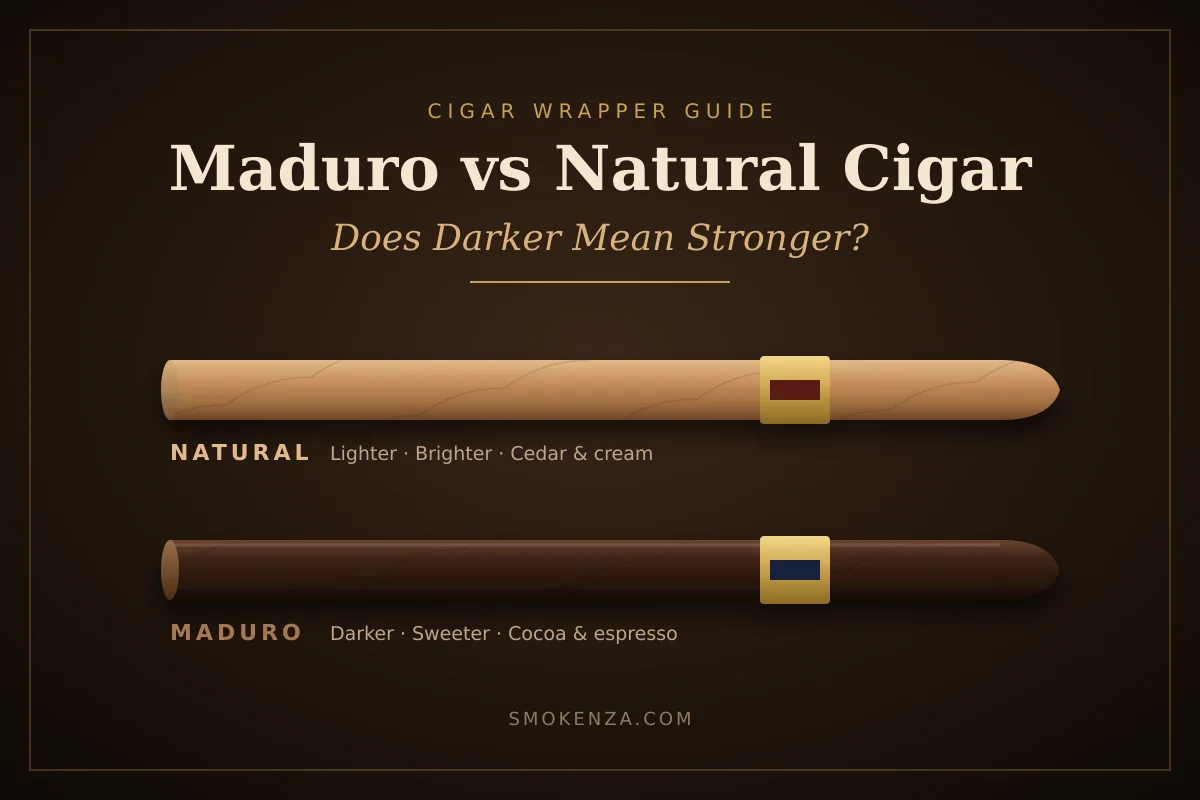
Same brand. Same size. Same band. Two wrapper shades sitting side by side.
That is how most premium cigar lines are sold, and the first assumption almost everyone makes is that the darker one hits harder. Sometimes it does. Most of the time it does not, and the reason has more to do with what is inside the cigar than what is wrapped around it.
This guide covers what each wrapper actually is, how color changes flavor, where strength really comes from, and which dark cigars make sense if you are just starting out.
Maduro vs Natural Cigar: The Quick Answer
Darker does not automatically mean stronger.
A Maduro wrapper is dark because the leaf was fermented longer and at higher heat. That process makes it taste sweeter and feel fuller in the mouth. Strength, meaning how much nicotine you feel, comes mainly from the filler tobacco in the center of the cigar, especially a leaf called ligero.
So a Maduro can be mild, and a light Natural can be powerful. The wrapper shapes flavor and body. The filler decides the kick.
| What the wrapper changes a lot | What the wrapper changes a little |
| Sweetness and flavor notes | Nicotine strength |
| Mouthfeel and body | How fast you feel the cigar |
| Aroma before and during the smoke | Overall strength rating |
| Appearance, oil and texture | Burn time |
Cigar Wrapper Colors Explained
Wrapper color runs on a scale, and "Natural" and "Maduro" are two broad zones on it rather than exact shades. Here is the full range, lightest to darkest:
- Candela (Double Claro): pale green, dried quickly to lock in chlorophyll. Grassy and rare today.
- Claro: light tan. Usually shade-grown, delicate and creamy.
- Colorado Claro: medium tan. Where most Natural wrappers start.
- Colorado: reddish brown. Often Habano or Corojo leaf, with more spice.
- Colorado Maduro: dark brown with red tones. The bridge between the two camps.
- Maduro: deep brown, oily, with a natural sheen.
- Oscuro: near black. Fermented the longest, often from the top of the plant.
In retail listings, "Natural" is shorthand for anything from Claro to Colorado. Some brands use it to mean a Connecticut Shade wrapper. Others use it for a Habano, Corojo, Cameroon or sun-grown leaf. The only reliable way to know is to read the wrapper line on the listing, which every product in our premium cigar collection carries.
What Is a Maduro Wrapper?
Maduro is Spanish for "ripe." In cigars, it describes a wrapper leaf that has been pushed further through fermentation than a standard leaf.
The process looks roughly like this:
- Leaf selection. Maduro wrappers usually come from higher on the plant, where leaves get more sun and grow thicker and oilier. A thin, delicate leaf would tear under the extra processing.
- Curing. The leaves hang in barns and air-cure from green to brown over several weeks.
- Extended fermentation. The cured leaves are stacked into large piles called pilones. The weight and moisture generate heat, and the piles are turned and rebuilt again and again. A Maduro runs longer and hotter than a Natural.
- Aging. The finished leaf rests before it is rolled, often for a year or more.
The exact times and temperatures vary by factory, and the Tobacconist University guide to curing and fermentation is a good plain-language breakdown of how longer or hotter fermentation creates a true Maduro.
The leaves behind most Maduros
Not every tobacco survives that much fermentation. Most Maduro wrappers come from a short list of tough, thick varieties:
- Connecticut Broadleaf: sun-grown in the Connecticut River Valley, earthy and sweet. It is a slow leaf to produce, and Cigar Aficionado's feature on Connecticut Broadleaf notes it takes around three years from field to finished cigar. The Chateau Fuente Maduro from Arturo Fuente wears this leaf over Dominican binder and filler.
- Mexican San Andrés: dark, cocoa-heavy and slightly earthy. It is the wrapper on the San Lotano Requiem Maduro Toro.
- Brazilian Mata Fina: sweet with a molasses note. AJ Fernandez uses it on the Bellas Artes Maduro and the Dias de Gloria Brazil.
- Pennsylvania Broadleaf: similar to Connecticut Broadleaf, a touch spicier. The AJ Fernandez Last Call Maduro uses Pennsylvania Broadleaf seed grown in Nicaragua.
Real Maduro versus shortcut Maduro
True Maduro color is earned through time and heat. Some low-cost cigars fake it by dyeing the leaf or pressure-cooking it to darken it fast. Two warning signs: color that rubs off on your fingers or lips, and a flat, uniform black with no natural variation or sheen. On handmade premium cigars this is rarely an issue.
What Is a Natural Wrapper Cigar?
A natural wrapper cigar uses a leaf that went through standard fermentation and stopped there. The result is a light-to-medium brown wrapper that lets more of the binder and filler come through.
Common Natural wrapper types include:
- Connecticut Shade (grown in Connecticut or Ecuador): the mildest and creamiest.
- Habano and Corojo: reddish brown, with pepper and cedar.
- Cameroon: thin and toothy, with a sweet-spice edge.
- Sumatra and sun-grown leaf: medium brown, with a little more depth.
The San Lotano Requiem Habano Toro is a good example of a Natural that is anything but bland: cedar, hickory and caramel under a Cuban-seed wrapper. At the lighter end, the San Lotano Requiem Connecticut Robusto leans into cream, toasted nut and brown sugar.
Maduro vs Connecticut Wrapper
This is where a lot of confusion starts, because both leaves can come from the same valley.
Connecticut Shade is grown under cloth tents that filter the sun, which keeps the leaf thin, smooth and pale. It is the classic "mild" wrapper.
Connecticut Broadleaf is grown in full sun a few fields away. The leaf gets thick, veiny and sugar-rich, and it is one of the most common Maduro wrappers in the world.
So when people compare maduro vs connecticut wrapper, they are really comparing two opposite ends of the same region: shade-grown and gentle against sun-grown and dark. Even so, a Connecticut wrapper does not guarantee a mild cigar. Put it over a Nicaraguan ligero-heavy filler and it can still be strong.
Does Wrapper Color Affect Cigar Strength?
To answer does wrapper color affect cigar strength, it helps to separate three words that often get mixed up:
- Strength: the nicotine effect. How much the cigar "hits" you.
- Body: how full and heavy the smoke feels in your mouth.
- Flavor: what you actually taste, from mellow to intense.
A Maduro wrapper reliably raises body and sweetness. It does far less to strength, for three reasons.
The wrapper is a small part of the cigar. It is one thin leaf. The filler makes up most of the tobacco you burn, so it carries most of the nicotine.
Ligero lives in the filler. Ligero comes from the top of the plant, gets the most sun, and holds the most nicotine. How much ligero a blender packs into the center is the biggest single lever on strength.
Fermentation softens the leaf. Longer fermentation drives off ammonia and breaks down some of the harsher compounds in tobacco. That is part of why a good Maduro tastes smooth and sweet instead of sharp.
There is one honest caveat. Because Maduro leaf often comes from higher primings and sun-grown plants, a Maduro version of a blend can feel a little fuller and occasionally a touch stronger than its Natural twin. The difference is usually smaller than people expect.
This is the point that settles most of the Maduro vs Natural Cigar debate: if you want to control strength, look at the strength rating and the filler, not the color. Our guide to cigar strengths explained covers ligero, viso, seco and volado in more detail, and you can filter straight to mild cigars, medium cigars or full-bodied cigars instead of guessing from the wrapper.
Are Maduro Cigars Stronger Than Natural?
So, are maduro cigars stronger than natural? It depends on which comparison you are making.
Same blend, only the wrapper changed. The Maduro will usually taste sweeter and feel heavier. Strength stays close, sometimes a notch higher.
Different blends with different wrappers. Anything goes. Maduro cigar strength runs the full range, from medium Dominican smokes to heavy Nicaraguan puros.
Two examples from the same shelf show the spread. The Arturo Fuente Chateau Fuente Maduro is widely rated medium, built on mellow Dominican filler. The San Lotano Requiem Maduro, with its Nicaraguan-forward blend, is one of the darker, fuller picks in the AJ Fernandez lineup. Both are Maduros. They are nowhere near the same strength.
The practical rule: treat color as a flavor clue and the strength rating as the strength answer. Every product listing on Smokenza shows an Intensity rating of Mild, Medium or Full, which tells you far more than the wrapper shade.
Maduro vs Natural Cigar Side-by-Side Comparison
| Natural | Maduro | |
| Color | Light tan to reddish brown | Deep brown to near black |
| Fermentation | Standard | Longer and hotter |
| Typical leaves | Connecticut Shade, Habano, Corojo, Cameroon | Connecticut Broadleaf, San Andrés, Mata Fina |
| Leaf feel | Thinner, smoother, drier | Thicker, oilier, often toothy |
| Sweetness | Low to moderate | Moderate to high |
| Body | Lighter to medium | Medium to full |
| Strength | Set by the filler | Set by the filler |
| Burn | Even, often quicker | Can burn a little slower |
| Best time | Morning, daytime, warm weather | Evening, after dinner, cooler weather |
Maduro vs Natural Cigar Flavor, Note by Note
The maduro cigar flavor profile is built on the sugars that extra fermentation draws out of the leaf. Expect:
- Dark chocolate and cocoa
- Espresso and roasted coffee
- Molasses, raisin and dark fruit
- Earth and leather
- A sweetness you can taste on your lips
A Natural plays brighter and drier, and lets the blend underneath speak more clearly:
- Cedar and toasted wood
- Almond, cashew and cream
- White pepper and baking spice
- Hay, citrus and light leather
A useful way to think about it: a Natural shows you the blend, while a Maduro adds a layer of its own on top.
Maduro vs Natural Cigar Pairings
Pairing follows the same light-versus-rich logic.
Naturals work with coffee, a morning espresso, a crisp lager, light rum or a Speyside Scotch. If coffee is your go-to, our list of the best mild cigars for coffee is a good starting point.
Maduros stand up to bourbon, aged rum, port, stout and a dark-roast coffee after dinner. The sweetness in the wrapper matches the sweetness in the glass.
How to Taste the Difference Yourself
The fastest way to learn what a wrapper contributes is to smoke the same line in two shades. Several lines we carry make this easy:
- AJ Fernandez San Lotano Requiem comes in three wrappers: Connecticut, Habano and Maduro. AJ adjusts the binder and filler for each, so think of it as three related cigars rather than a pure wrapper swap.
- Brioso offers the Toro and Gigante in both Natural and Maduro.
- Davidoff Primeros come as Dominican and Dominican Maduro, and as Nicaragua and Nicaragua Maduro. At just over four inches, they are an easy way to compare without committing an hour.
- Don Tomas runs Clasico, Maduro and Sungrown versions.
- Odyssey offers Connecticut, Habano and Maduro blends at an everyday price.
- Arturo Fuente Chateau Fuente comes in Natural, Sun Grown and Maduro.
A simple method that works:
- Smoke the two cigars on different days, at the same time of day.
- Drink water, not a strong spirit, so your palate stays clean.
- Pay attention to the first third, before the cigar heats up and the flavors blend together.
- Note sweetness, body and how you feel at the halfway point.
New to the basics? Our guides on how to cut a cigar, whether you inhale cigars and how long a cigar lasts will help you get a clean, fair comparison.
Best Maduro Cigars for Beginners
If the sweetness of a Maduro appeals to you but you do not want a heavy nicotine hit, start with a medium blend in a manageable size. These are the best maduro cigars for beginners from what we stock:
- Arturo Fuente Chateau Fuente Maduro. A 4 1/2 x 50 robusto with a Connecticut Broadleaf wrapper over Dominican filler. Medium in strength, sweet and consistent. A classic first Maduro. The Fuente family story explains why this line has such a following.
- Davidoff Primeros Dominican Maduro. Small, short and refined. A low-commitment way to try a Maduro in under 30 minutes.
- Brioso Toro Maduro. An approachable everyday Maduro at a price that makes experimenting easy.
- Don Tomas Maduro. Honduran-made and easygoing, a good bridge between mild cigars and darker blends.
- AJ Fernandez 5-cigar sampler. Five different cigars at a low price, so you can find out which direction you lean before committing to a box.
Cigars to save for later: the San Lotano Requiem Maduro, the AJ Fernandez 20th Anniversary Toro Maduro and the larger Alec Bradley Chunk Maduro sizes. They are excellent cigars, but they are fuller, longer smokes that reward a palate with some experience.
If you are still building your palate, the best cigars for beginners collection groups easy-smoking options in one place, and our cigar gift sets include samplers that mix wrapper shades in a single box.
Dark Wrapper Cigars Outside the Premium Aisle
Dark wrapper cigars are not limited to handmade boxes. The ACID Krush Morado Maduro Cigarillos from ACID put a Maduro wrapper on a short, infused smoke, and our cigarillo collection includes several darker options.
One thing to know: on mass-market machine-made cigars in our cigar collection, a "dark" label can describe a homogenized sheet wrapper rather than a fermented whole leaf, so the word does not carry the same meaning it does on a premium cigar. Our guide on what a cigarillo is explains the difference between natural leaf and sheet wrappers.
Storing Maduro and Natural Cigars
Both wrappers want the same conditions: roughly 65 to 70 percent humidity and 65 to 70°F. A few small differences are worth knowing:
- Maduro wrappers are thicker and oilier, so they tolerate small humidity swings a little better.
- Thin Natural wrappers, especially Connecticut Shade, crack faster if they dry out.
- Both benefit from resting in a humidor for a week or two after shipping before you smoke them.
Frequently Asked Questions
Are Maduro cigars stronger than Natural cigars?
Not by default. Maduros taste sweeter and feel fuller, but nicotine strength comes mostly from the filler. A Maduro over mild Dominican filler can be gentler than a Natural over Nicaraguan ligero.
Is Maduro a type of tobacco?
No. Maduro is a process, not a seed variety. It describes a wrapper leaf that was fermented longer and hotter. The most common Maduro leaves are Connecticut Broadleaf, Mexican San Andrés and Brazilian Mata Fina.
Why do Maduro cigars taste sweet?
Extended fermentation breaks down starches in the leaf into natural sugars and drives off harsher compounds. No sugar is added on a genuine premium Maduro.
Is a Connecticut wrapper always mild?
Connecticut Shade is the mildest common wrapper, but the filler still decides strength. Connecticut Broadleaf, grown in the same region, is one of the darkest Maduro leaves there is.
Is Oscuro stronger than Maduro?
Oscuro is darker still and usually comes from the top of the plant, so it often feels fuller. It is not automatically stronger. Check the strength rating for the specific cigar.
Should a beginner start with a Maduro or a Natural?
Either works. Many new smokers enjoy Maduros because the sweetness is easy to like. The key is choosing a mild or medium blend in a smaller size, whichever wrapper you pick.
The Bottom Line
The Maduro vs Natural Cigar question comes down to flavor, not force. A darker wrapper gives you more sweetness, more body and deeper notes of cocoa and coffee, while a Natural keeps things brighter and lets the blend show through. Strength sits in the filler, so the rating on the listing will always tell you more than the color of the leaf. Pick the wrapper for the flavor you want, pick the strength for how you want to feel, and browse the full premium cigar collection to find both in the same box.
For adults 21 and over. Cigars contain nicotine, an addictive chemical.
What did you think?
Share this article
Help others discover this content by sharing it with your network.