
Pick up two cigars of the same size and the first difference you notice is the wrapper. One is pale and silky. The other is dark, oily and slightly rough.
Those differences are not cosmetic. They tell you how the leaf was grown, which part of the plant it came from, how long it was fermented and how it has been stored since it left the factory.
This guide shows you how to read a wrapper the way a factory sorter does: by color, veins, texture and oil. Along the way you will see real cigars from the Smokenza catalog that show each style, so you can compare what you read with what you smoke.
What Makes a Good Cigar Wrapper Leaf?
A quality wrapper is even in color, thin but elastic, smooth or finely toothed, lightly oily, and free of cracks, holes and raised veins. It should be applied tightly, with flat seams and a neat cap.
Those five traits are the core of cigar wrapper quality, and they are the same things wrapper sorters check before a leaf is allowed onto a premium cigar.
- Color: consistent from foot to cap. Light mottling is acceptable on sun-grown leaf.
- Veins: fine and flat, not rising above the surface.
- Texture: silky, smooth or toothy depending on the leaf type, but never brittle or papery.
- Oil: a soft sheen under light, not a dull, chalky surface.
- Construction: no tears, gaps or lumps, and seams that lie flat along the spiral.
If a cigar passes all five checks, the wrapper is doing its job. If it fails one, the next sections explain whether that is a real flaw or simply the character of the leaf.
Why the Wrapper Matters More Than Its Size Suggests
The wrapper is a small share of a cigar's total tobacco, yet it is the first thing you see, touch and taste on your lips. It also sits at the outer edge of the ember, so its thickness and oil content affect the burn line and the ash.
Every premium cigar is built from three cigar tobacco leaf types: filler at the core, binder holding the filler together, and wrapper on the outside. Our cigar anatomy guide covers each part in detail.
Wrapper tobacco is grown and handled differently from the rest. Much of it is grown under cloth shade to keep the leaf thin and the veins small. It is harvested by priming, which means picking leaves in stages from the bottom of the stalk to the top as each level ripens.
Wrapper usually comes from the middle primings, known as seco and viso. These leaves are large, thin and elastic enough to stretch around a cigar without splitting. Leaves from the top of the plant, called ligero, are thicker, darker and stronger, which is why they are more common in filler. Our guide to cigar strengths explains how these primings shape power.
Only a fraction of harvested leaf is good enough to become a wrapper. The rest is redirected to binder or filler. That strict selection is why the wrapper is usually the most expensive leaf in the cigar. If you want to follow the full journey from field to box, read how cigars are made.
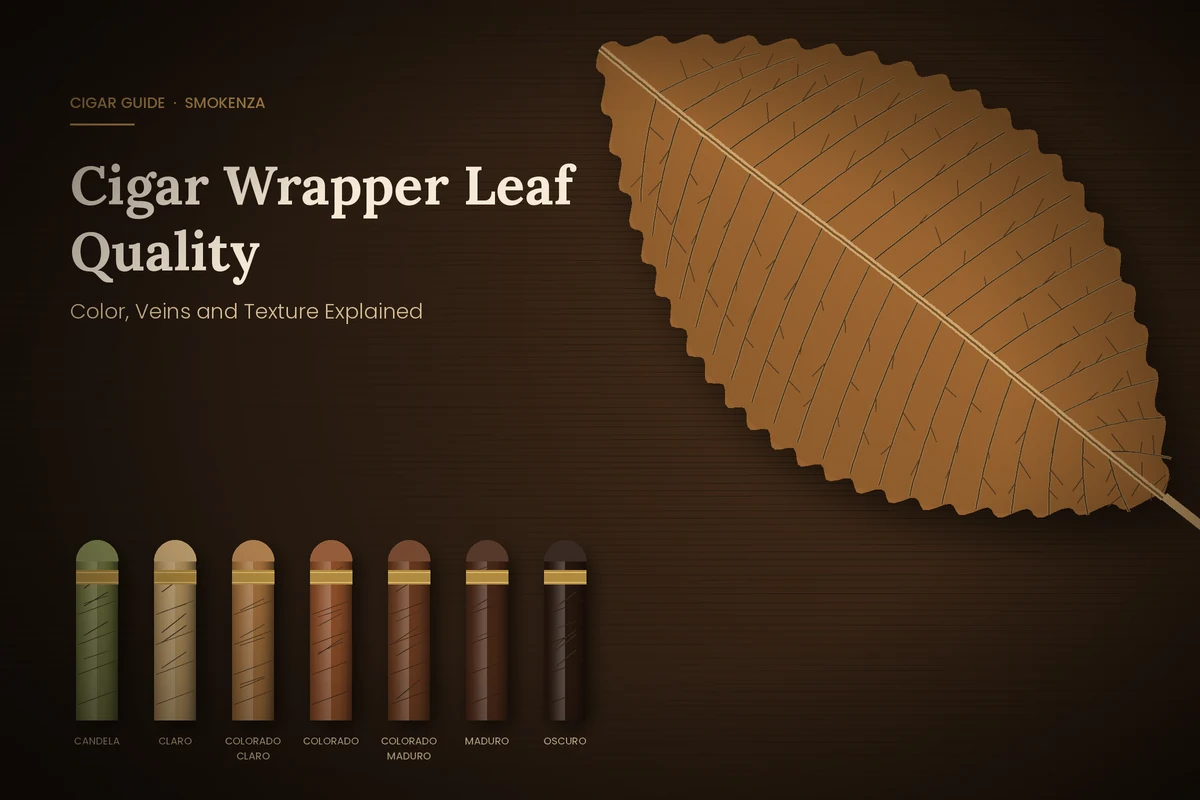
Cigar Wrapper Leaf Colors: The Shade Chart
The industry uses a set of traditional names to describe cigar wrapper leaf colors. These names describe appearance only. They do not tell you the seed, the country or the strength.
Here are the main cigar wrapper shades, from lightest to darkest:
| Shade | What it looks like | Common leaf behind it | Typical flavor tendency | Example to compare |
| Candela (Double Claro) | Green to yellow-green | Leaf dried quickly to hold chlorophyll | Grassy, light, slightly sweet | Rare in today's market |
| Claro | Pale tan to light gold | Connecticut Shade, Ecuadorian Connecticut | Cream, cedar, nuts | AJ Fernandez New World Connecticut Toro |
| Colorado Claro | Light to medium brown | Cameroon, Sumatra | Toast, light spice, sweetness | AJ Fernandez New World Cameroon Toro |
| Colorado | Reddish brown | Habano, Corojo | Spice, cedar, leather | San Lotano Requiem Habano Robusto |
| Colorado Maduro | Dark brown with a red cast | Sun Grown, Habano, Sumatra | Cocoa, coffee, spice | Rocky Patel Sungrown Robusto |
| Maduro | Dark brown to chocolate | San Andrés, Broadleaf, long-fermented Habano | Sweet, cocoa, coffee | San Lotano Requiem Maduro Robusto |
| Oscuro (Double Maduro) | Near black | Top primings with extended fermentation | Earth, dark chocolate, pepper | AJ Fernandez New World Oscuro Robusto |
You will also see trade labels such as Natural and EMS (English Market Selection). Both cover a light to medium brown range rather than one exact shade. The Villiger Export Natural and Punch Clasico Rothschild EMS are good examples.
Does a Darker Cigar Wrapper Leaf Mean a Stronger Cigar?
Not by itself. Wrapper color comes from the tobacco variety, sun exposure, priming, curing, fermentation and aging. Strength comes mostly from the filler and the primings the blender chooses.
Maduro is a good example. It describes a process, not a seed. The leaf is fermented longer and often at higher temperatures, which darkens it and tends to bring out sweetness. Many maduro cigars smoke smoother than their color suggests.
The educators at Tobacconist University make the same point: wrapper color is descriptive, not a measure of strength or a reliable predictor of flavor.
The easiest way to see this for yourself is to smoke one blend in two wrappers. Undercrown Shade Robusto and Undercrown Maduro Robusto share a vitola and brand family, but the wrapper shifts the character noticeably. Our breakdown of mild vs medium cigars covers where strength actually comes from.
Cigar Wrapper Types and What They Should Look Like
Color names describe shade. Cigar wrapper types describe the tobacco itself: its seed family, growing method and region. Each type has a normal look, and knowing it stops you from mistaking character for a defect.
| Wrapper type | Usual shade | Veins | Texture | Examples at Smokenza |
| Connecticut Shade / Ecuadorian Connecticut | Claro | Very fine | Silky, smooth | ACID 20 Connecticut Toro, Room 101 Payback Connecticut Robusto |
| Habano | Colorado to Maduro | Fine to moderate | Oily, slightly toothy | Punch Knuckle Buster Habano Robusto |
| Corojo | Colorado | Moderate | Oily, firm | Punch Rare Corojo Elite, Rocky Patel Edge Corojo Robusto |
| Cameroon | Colorado Claro | Visible, thin | Distinctly toothy | ACID Krush Red Cameroon |
| Sumatra | Colorado Claro to Colorado | Moderate | Slightly toothy | Rocky Patel Edge Sumatra Toro, Room 101 Big Payback 70s Sumatra |
| Connecticut Broadleaf | Maduro | Prominent | Thick, leathery | Enclave Broadleaf Churchill |
| Sun Grown | Colorado Maduro | Moderate | Oily, some tooth | Rocky Patel Sungrown Robusto |
Habano deserves its own note because the name is so often misread. It refers to seed heritage, not Cuban origin. Our Habano wrapper explainer covers that difference in full.
Several brands make the same blend in multiple wrappers, which is the cleanest way to train your eye. Compare the lines covered in our Odyssey Connecticut, Habano and Maduro guide and the Don Tomas Clasico vs Maduro vs Sungrown comparison.
Natural Leaf vs Homogenized Sheet
Everything in this guide refers to a natural cigar wrapper leaf: a whole piece of tobacco cut from a single leaf, with its own veins, oils and color variation.
Many machine-made cigarillos use homogenized tobacco leaf (HTL) instead. HTL is a sheet made from ground tobacco and plant-based binders. It looks perfectly uniform, with no veins and no tooth, and that sameness is the giveaway.
Neither is a scam. They are different products at different price points. Our guide to what a cigarillo is explains the distinction, and you can compare whole-leaf options such as Loose Leaf and Backwoods against the wider cigarillo collection.
Cigar Wrapper Veins: What They Tell You
Every tobacco leaf has a thick central midrib, which is stripped out, and a network of smaller lateral veins that stay in the wrapper. How those cigar wrapper veins look and feel is one of the clearest quality signals you have.
How to Read the Veins on a Cigar Wrapper Leaf
- Fine and flat: the mark of a top-grade wrapper. You can see them, but you cannot feel them.
- Visible but flat: normal on Broadleaf, Cameroon and many sun-grown leaves. This is character, not a flaw.
- Raised and thick: a lower-grade leaf or a poor choice of leaf for that cigar. Thick veins burn slower than the surrounding leaf, which can cause an uneven burn line and an occasional harsh puff.
- Veins that cross the seam awkwardly: a roller who did not orient the leaf properly. Skilled rollers place the smoother upper face of the leaf outward.
The touch test is simple. Run a fingertip lightly from foot to cap. A good wrapper feels like one continuous surface. If you can trace ridges with your eyes closed, the veins are on the heavy side.
There is also a practical reason veins matter beyond looks. As a cigar dries, thick veins shrink at a different rate from the thin leaf around them. That is where many wrapper cracks start.
Cigar Wrapper Texture and Oil
Cigar wrapper texture varies more by type than most smokers expect. Four textures cover nearly every premium cigar:
- Silky: smooth and fine, almost like thin suede. Typical of Connecticut Shade and Ecuadorian Connecticut.
- Toothy: covered in tiny raised bumps, commonly linked to oil on the leaf surface. Cameroon is the classic example, with Sumatra and some Habano close behind.
- Oily: a visible sheen when you tilt the cigar under light. Common on Habano, Corojo and well-kept maduro leaf.
- Leathery: thick, slightly rough and sturdy. Typical of Broadleaf and San Andrés maduro.
Oil is the part of texture that changes after the cigar leaves the factory. A wrapper that looks dull and feels papery is often simply dry. Kept at a stable 65 to 70 percent relative humidity, most wrappers regain some sheen within a couple of weeks.
Texture also shows up on the palate. Silky leaf tends to read as creamy and soft on the lips. Toothy and oily leaf usually carries more spice and sweetness. Our cigar flavor wheel can help you put words to what you taste.
Signs of a Damaged Wrapper
Some flaws come from the field. Most come from storage. Here is how to tell them apart:
- Cracks or splits: the cigar dried out or went through a fast humidity change. Small cracks near the foot can still smoke fine. Long splits usually unravel.
- Soft or spongy spots: over-humidification or an under-filled section of the cigar.
- Fine white powder (plume): a dusty film that brushes off easily and leaves no stain. Generally harmless.
- Mold: fuzzy, raised, often blue-green, and it stains the leaf. It usually smells musty. Throw the cigar away and check its neighbors.
- Pinholes: a sign of tobacco beetles. Remove the cigar and inspect the rest of your storage.
- Uneven blotches: small light spots are often natural on sun-grown leaf. Large green patches on a non-candela wrapper can point to incomplete fermentation.
- Loose cap or lifting seams: usually rough handling or dryness. A little cap glue can sometimes save it, but the draw may suffer.
Cigar Wrapper Grades and How Factories Sort Leaf
There is no single consumer-facing system of cigar wrapper grades. Each factory uses its own internal classifications, sorting leaf into many piles by shade, size, texture and defects.
US-grown wrapper does have official classes. Under the USDA's tobacco classification, Connecticut Valley Shade-grown (Type 61) and Georgia and Florida Shade-grown (Type 62) are listed as Class 6 cigar-wrapper types. In practice, though, most premium wrappers are graded by the factory's own sorters rather than by a government label.
Those sorters do far more than reject damaged leaf. They match shades so that every cigar in a box looks the same, a practice called color matching. They also set aside the most even, fine-veined leaves for flagship lines.
Leaf that misses wrapper standards is not wasted. It often becomes binder, or goes into bundle cigars where box presentation is traded for price. With bundles such as the Rocky Patel Bucktown, small differences in shade from stick to stick are normal and say little about how the cigar smokes.
How to Check Wrapper Quality in 60 Seconds
You do not need a sorting table to judge a wrapper. This quick routine works on any premium cigar:
- Look in daylight. Artificial light hides color variation and makes dry leaf look oilier than it is.
- Compare against the box. If one cigar is far lighter or darker than the rest, it may have been stored differently.
- Feel the surface. Run a fingertip along the cigar to check veins and texture.
- Squeeze gently. It should give slightly and spring back. Hard spots can mean a plug. Soft spots can mean an under-filled cigar.
- Smell the wrapper. It should smell like tobacco, cedar, hay or barnyard. Sharp ammonia suggests under-fermented leaf. Musty points to mold.
- Check the cap and seams. Seams should lie flat and the cap should sit tight without lifting.
Once lit, the wrapper keeps giving you information. A clean burn line and firm, layered ash usually mean good leaf and good storage. Our guide on how to smoke a cigar covers how to light evenly so the wrapper has a fair chance.
Which Wrapper Should You Start With?
Use wrapper type as a starting filter, then let the full blend decide.
If you are new to cigars, begin with a Connecticut or other claro wrapper. They are usually the most forgiving. The Rocky Patel Edge Connecticut Robusto and San Lotano Requiem Connecticut Robusto are good references. The mild cigars and best cigars for beginners collections are built around this style.
If you want more spice and body, move to Habano, Corojo or Sumatra. These wrappers sit at the heart of our medium cigars collection and lines from AJ Fernandez and Alec Bradley.
If you like sweetness and depth, try maduro and oscuro leaf such as the Rocky Patel Edge Maduro Robusto. Heavier blends in this range are grouped in our full-bodied cigars collection.
If you want to compare side by side, a cigar sampler or one blend in three wrappers teaches more in a week than a year of reading labels. The San Lotano Requiem line is especially useful here because it comes in Connecticut, Habano and Maduro.
Size matters too. A thinner cigar has more wrapper relative to filler, so the wrapper's character comes through more strongly. Our toro vs robusto guide and corona sizes guide explain how vitola changes the balance. You can also browse the full premium cigar range by wrapper once you know what to look for.
Frequently Asked Questions
What is the best cigar wrapper?
There is no single best wrapper. Connecticut suits smokers who like creamy, mellow profiles. Habano and Corojo suit those who want spice. Maduro suits those who like sweetness and cocoa. The best wrapper is the one that matches your palate and is well made.
Why is my cigar wrapper cracking?
Most cracks come from dryness or a fast change in humidity, such as moving a cigar from a humid box straight into cold, dry air. Store cigars at a steady 65 to 70 percent humidity and let them adjust gradually.
Is white powder on a wrapper mold?
Not always. Plume is a fine, dusty powder that brushes off without staining. Mold is fuzzy, raised, often blue-green, stains the leaf and smells musty. If in doubt, discard the cigar.
Does the wrapper control most of a cigar's flavor?
It has a large influence, especially on aroma and the first impression on the lips, but binder and filler shape strength and depth. The thinner the cigar, the more the wrapper dominates.
What does "Natural" mean on a cigar label?
It is a trade term for a light to medium brown wrapper, usually in the Colorado Claro to Colorado range. It is not a precise shade and does not refer to a specific seed or country.
Can you tell where a wrapper was grown just by looking at it?
Not reliably. Growing conditions influence color and texture, but fermentation and aging can make leaves from different countries look similar. Check the blend details instead of guessing from appearance.
Final Takeaway
A well-made Cigar Wrapper Leaf is even in color, fine in its veins, supple to the touch and carries a light natural sheen. Color tells you about processing rather than strength, veins and texture tell you about grade and leaf type, and most visible damage comes from storage rather than the field. Learn to read those signals, then confirm them by smoking the same blend in different wrappers, and you will choose cigars with far more confidence.
This content is intended for adults 21 and over.
What did you think?
Share this article
Help others discover this content by sharing it with your network.